Wondering why two South Loop condo buildings that look similar online can feel completely different once you live there? That is one of the biggest surprises buyers run into in this part of Chicago. If you are trying to sort through towers, loft conversions, amenities, and monthly assessments, a smart comparison framework can save you time and help you avoid expensive mistakes. Let’s dive in.
Start With South Loop Micro-Location
South Loop is not one single, uniform pocket. Local sources describe it broadly around places like the Museum Campus, Motor Row, the Prairie Avenue District, and Soldier Field, while also noting that Printer’s Row is its own nearby area with former printing buildings adapted into lofts. In real life, that means two buildings both labeled “South Loop” can offer very different daily experiences.
Before you compare finishes, start by comparing where each building sits within the neighborhood. A building near Roosevelt may feel different from one closer to Museum Campus, Printer’s Row, or McCormick Place. Your commute, street activity, access to parks and cultural attractions, and event-related traffic can all vary depending on the exact location.
Compare Transit Access Early
Transit should be part of your first-pass screening. CTA identifies Roosevelt as the primary L stop near South Loop, with access to the Red, Orange, and Green lines, along with several bus routes. CTA also lists Cermak-McCormick Place as a Green Line station, and Metra Electric serves Museum Campus/11th Street and McCormick Place.
That matters because convenience is not just about distance on a map. It is about how easily you can get to work, catch a train, or move around the city on a normal weekday. When you compare buildings, ask yourself which transit pattern best fits your routine, not just which address sounds most familiar.
Think About Daily Life, Not Just Views
Many South Loop buyers focus first on skyline or lake views. Those views can absolutely matter, but they should be weighed alongside what your week actually looks like. A building near major attractions or event venues may offer energy and convenience, while another may feel more tucked into a residential rhythm.
The best choice is the one that lines up with how you live. If you work downtown, value fast train access, or want easier access to certain parts of the neighborhood, micro-location can shape your satisfaction more than lobby style or staging ever will.
Review Association Documents Before You Commit
A beautiful kitchen can be replaced. Weak condo finances are much harder to fix. That is why one of the most important steps in comparing South Loop condo buildings is reviewing the association documents before you get emotionally attached to a unit.
Under the Illinois Condominium Property Act, a resale seller must obtain and make available for inspection, upon demand, a broad set of association documents. These include the declaration, bylaws, rules, information on liens and unpaid assessments, anticipated capital expenditures for the current and next two fiscal years, reserve fund status, the latest financial statement, pending suits or judgments, association insurance coverage, and a good-faith statement about prior unit alterations. The association must provide the requested information within 10 business days.
What to Look For in the Resale Packet
When you compare buildings, focus on the documents that help you understand both current costs and future risk. Pay close attention to:
- The latest annual budget
- Reserve fund status
- Anticipated capital expenditures
- Any pending litigation or judgments
- Insurance coverage summary
- Rules and bylaws
- Unpaid assessment or lien information
- Statement about prior unit alterations
These documents can tell you far more than listing remarks. They help you see whether a building is being run with transparency and whether major costs are already being planned for.
Compare Assessments With Reserve Health
It is easy to assume a lower monthly assessment is always better. In reality, that number only tells part of the story. A building with lower dues may simply be postponing maintenance, underfunding reserves, or setting owners up for future special assessments.
Illinois law requires boards to distribute a detailed proposed annual budget. For budgets adopted on or after July 1, 1990, the law also requires reasonable reserves for capital expenditures and deferred maintenance. In setting reserve levels, boards are directed to consider the useful life and replacement cost of major systems, any reserve study, the impact of assessments on owners and unit values, and the association’s ability to finance or refinance.
Why Reserve Waivers Matter
The statute allows a two-thirds vote to waive reserve requirements if the declaration does not already require them. If that happens, the waiver must be disclosed in bold to prospective purchasers. That makes reserve funding a major comparison point when you are evaluating one South Loop building against another.
If one tower has slightly higher monthly assessments but stronger reserves, that may be a healthier long-term setup than a building with lower dues and limited financial cushion. You are not just buying the unit. You are buying into the building’s financial structure.
Special Assessments Deserve Extra Attention
Illinois also provides a petition process when a new budget or special assessment pushes total assessments above 115% of the prior year, although emergency or legally mandated assessments can be handled differently. For buyers, the key takeaway is simple: ask whether the building has a history of special assessments and whether major projects are already funded.
That question can help you compare real carrying costs, not just the current monthly line item. A “cheaper” building may not stay cheaper for long if expensive work is looming.
Match Amenities to Budget and Reliability
South Loop towers often compete on amenity packages. You may see fitness centers, rooftop decks, pools, package rooms, dog runs, garages, and door staff across multiple buildings. The right question is not just what exists, but how well those amenities are maintained and supported.
Because Illinois budgets must show common expenses by category and reserve contributions, buyers can compare what a building offers with what it actually spends to operate and maintain those features. That makes the budget a useful reality check. A long amenity list is not especially valuable if the building is not funding the staffing, upkeep, and eventual replacement those spaces need.
Questions to Ask About Amenities
As you compare buildings, ask practical questions such as:
- Are amenities open daily or only at limited times?
- Does the building appear to have enough staff for package handling and move-ins?
- Are elevator, lobby, or common-area upgrades already funded?
- Does the current budget clearly show operating and reserve support for these features?
These questions help you get beyond marketing language. In many cases, the better-run building is not the one with the longest feature list. It is the one where the amenities are consistently usable and financially supported.
Compare Floorplans, Not Just Bedroom Count
South Loop includes a mix of modern high-rises and historic areas nearby, including places associated with loft-style conversions and older building stock. That mix creates major variation in layout, even among homes with the same bedroom count. A two-bedroom in one building can live very differently from a two-bedroom in another.
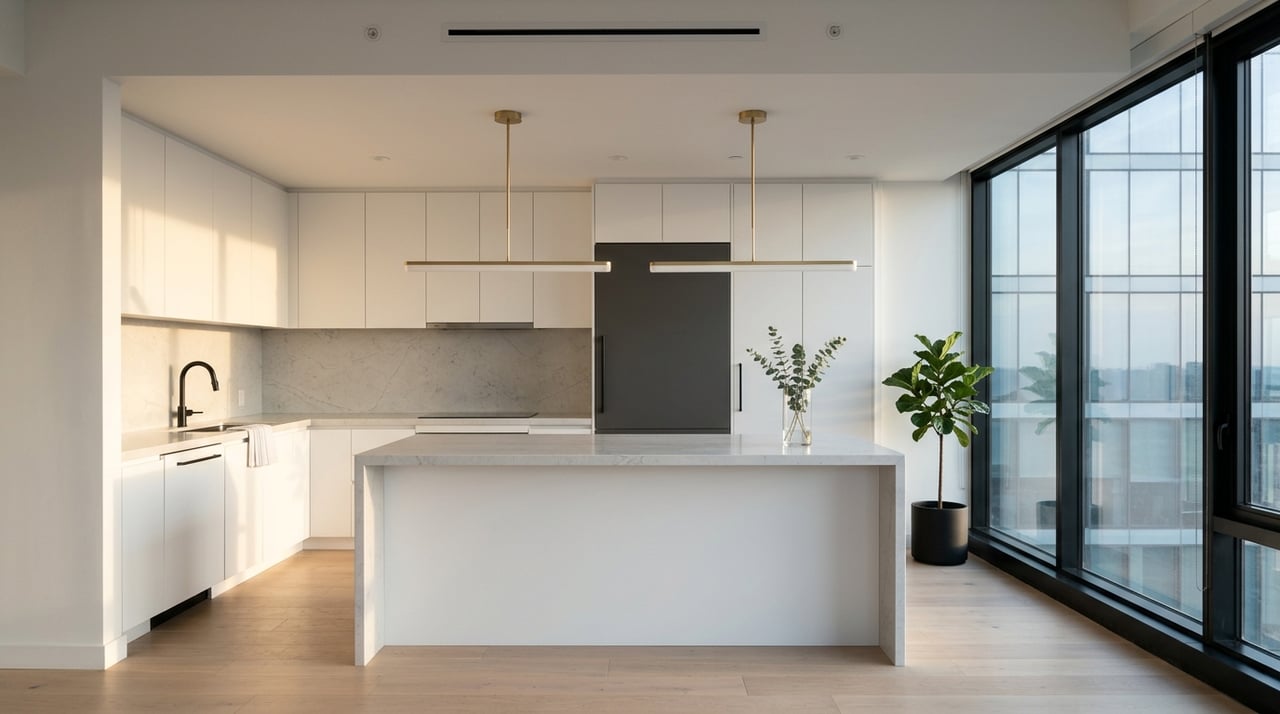
When you tour units, compare actual livability. Look at how the space flows, how much natural light reaches the main living areas, whether the layout wastes square footage, and how useful the storage really is. Ceiling height, corner exposure, and the placement of bedrooms and living spaces can all affect how a home feels day to day.
Focus on Livable Space
A smart comparison checklist includes:
- Light and window exposure
- Layout efficiency
- Storage inside the unit
- Ceiling height
- Kitchen functionality
- Separation between living and sleeping areas
- Corner or single-exposure layout
This is where building-specific knowledge matters. In high-rise condo buying, the better floorplan often outperforms a prettier finish package over time.
Check Rules That Affect Future Flexibility
Association rules can shape your ownership experience just as much as the unit itself. Since the resale packet includes the declaration, bylaws, and rules, you can use those documents to confirm details that matter to your plans.
For example, you should verify rental limits, pet rules, move-in procedures, renovation approval standards, smoking rules, and any short-term occupancy restrictions. If you are buying with future flexibility in mind, these items are especially important. A building may fit your needs today but feel restrictive later if the rules do not align with your plans.
Confirm What Is Actually Included
The alteration statement can also help clarify whether features such as balconies, terraces, storage cages, or built-ins are truly part of the unit or are limited common elements with separate rules. That may sound technical, but it can affect use, responsibility, and resale conversations later.
When you compare South Loop buildings, rules should never be an afterthought. They are part of the value equation.
Use a Simple South Loop Comparison Framework
If you are trying to narrow several options down, keep your framework simple and consistent. The cleanest building comparison usually comes down to six categories:
- Location and commute
- Association health
- Assessment stability
- Amenity usefulness
- Floorplan livability
- Resale flexibility
This approach keeps you focused on what matters most. In South Loop, the right building is often not the one with the flashiest lobby or the most dramatic photos. It is the one that fits your routine, your budget, and your longer-term plans with the fewest surprises.
Buying a condo in a downtown high-rise market takes more than a quick online search. If you want help comparing South Loop buildings with a sharper eye on floorplans, HOA details, and the tradeoffs that really affect daily life, Larissa Brodsky offers the kind of condo-specific guidance that can make your decision feel much clearer.
FAQs
What should you compare first when buying in South Loop?
- Start with micro-location, including commute options, nearby transit access, and how the building’s exact location fits your daily routine.
What association documents should you review for a South Loop condo?
- Review the declaration, bylaws, rules, budget, reserve fund status, anticipated capital expenditures, financial statements, insurance summary, pending litigation information, and alteration disclosures.
Why do condo reserves matter when comparing South Loop buildings?
- Reserve funding helps show whether a building is planning for major repairs and deferred maintenance, which can affect future special assessments and overall financial stability.
How should you compare South Loop condo amenities?
- Compare amenities by usefulness, maintenance, staffing, operating support, and whether the building’s budget appears to support them over time.
Why do floorplans matter more than bedroom count in South Loop?
- South Loop buildings can vary widely in layout, light, storage, and flow, so two homes with the same bedroom count may live very differently.
What building rules should you check before buying a South Loop condo?
- Confirm rental limits, pet rules, move-in procedures, renovation approvals, smoking rules, short-term occupancy restrictions, and whether certain features are part of the unit or limited common elements.