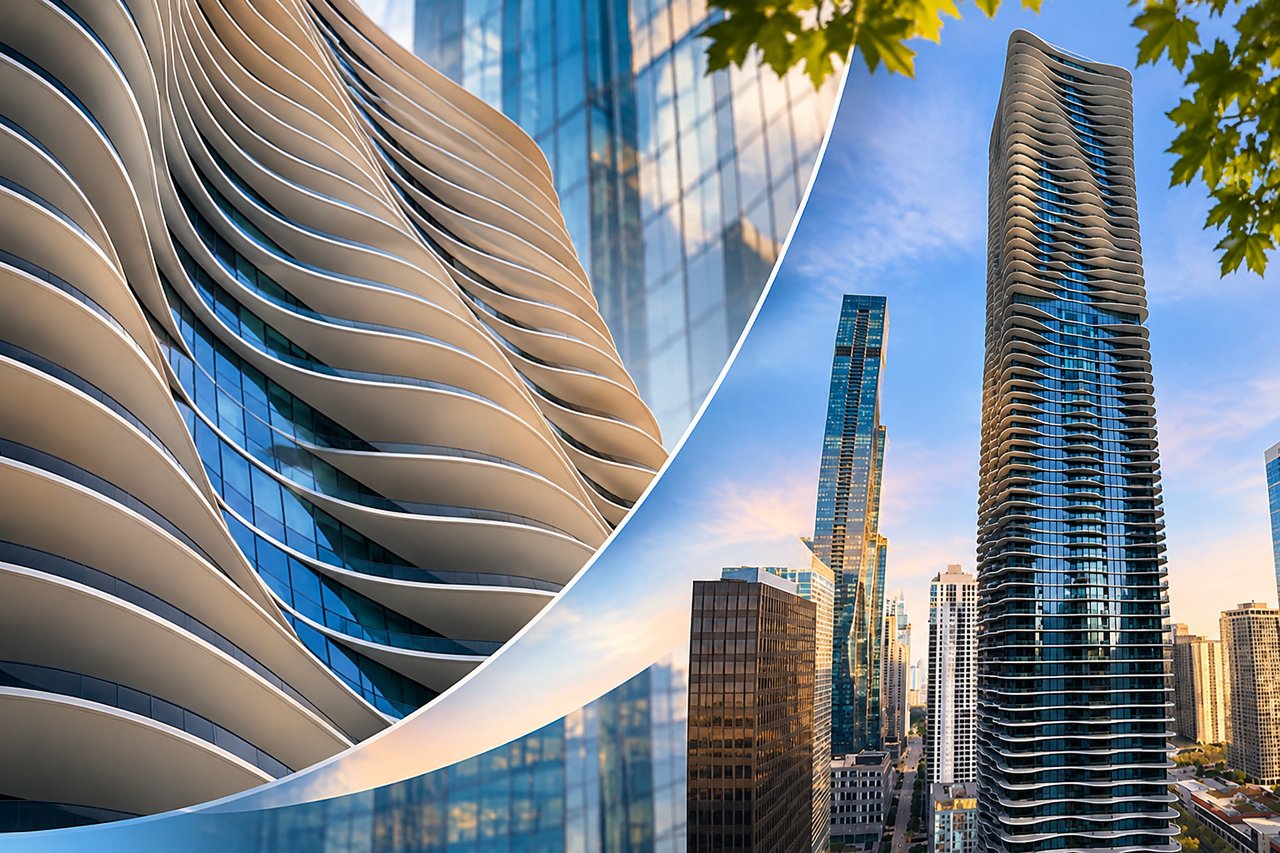
Stand in Lakeshore East and look up at Aqua, and the building seems to move.
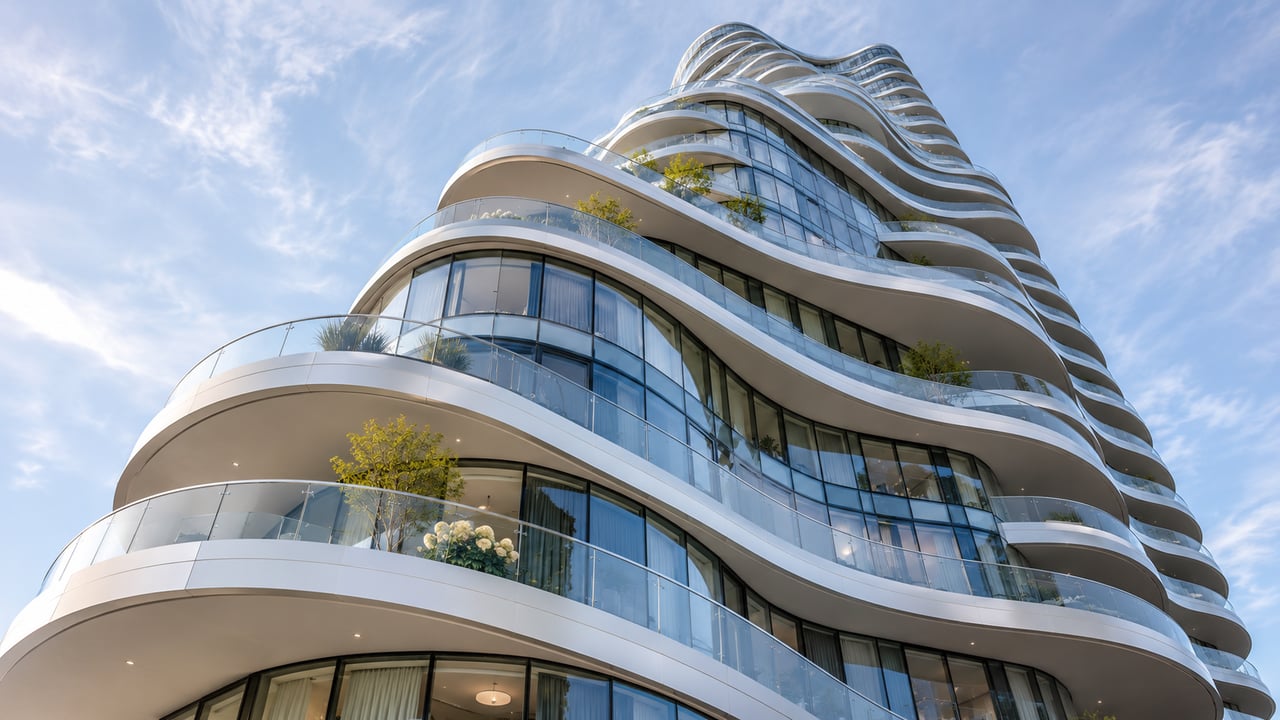
Its white concrete balconies swell and recede from floor to floor, catching the light differently every hour. From a distance, the 82-story tower looks less like a skyscraper than a column of water.
Completed in 2010, Aqua at 225 N. Columbus Drive became one of Chicago's most recognizable buildings almost overnight. It also became one of the clearest expressions of what Lakeshore East set out to be: a neighborhood where architecture and landscape meet.
A Small Chicago Firm and a Very Tall Tower
When Magellan Development Group chose Studio Gang to design Aqua, the firm was a small Chicago practice led by Jeanne Gang, known mostly for community centers and houses.
Aqua was its first skyscraper.
Gang approached the tower not as a glass box but as a vertical landscape. The building's form would come from its balconies, and the balconies would come from the views, the sunlight, and the people living behind them.
Loewenberg Architects, which designed several other Lakeshore East buildings, served as architect of record.
The Balconies: A Landscape in Concrete
Aqua's balconies are its signature, and nearly everything about them was designed with a purpose.
Gang drew inspiration from the limestone outcroppings found along the Great Lakes. Each floor plate has its own shape, and the balconies extend anywhere from 2 to 12 feet, thinning toward their edges.
Their shapes were not random. They were shaped by what residents would see and how the sun would fall on each floor.
The balconies also do practical work:
- Wind: the undulating edges help break up wind around the tower, making the outdoor spaces more usable at height.
- Shade: deeper balconies shade the apartments below them.
- Birds: the varied surfaces help birds recognize the building and avoid colliding with its windows.
- Neighbors: because the balconies differ from floor to floor, residents can see and talk with neighbors above and below, something rare in a high-rise.
Building it was its own challenge. Contractors used GPS coordinates to set the edge of each balcony as the concrete was poured, floor after floor.
Three Buildings in One
Aqua is not only a condominium tower. It is a vertical neighborhood.
The lower floors hold a hotel, today the Radisson Blu Aqua. Above it are rental apartments. The upper floors are condominiums, with penthouses near the top of the tower.
When Aqua opened, it combined 474 rental apartments and 264 condominiums above the hotel. At its base, a three-story podium holds lobbies, an indoor pool, a ballroom, and other shared spaces.
On top of that podium sits one of the building's best-kept secrets: an 80,000-square-foot landscaped roof garden, one of the largest green roofs in Chicago.
The tower was certified LEED, and its sustainable features include rainwater collection, energy-efficient lighting, and glass designed to reduce heat gain.
Recognition
Aqua's design drew attention from the moment it rose above Lakeshore East.
- Emporis named it Skyscraper of the Year for 2009.
- AIA Chicago gave it a Distinguished Building Honor Award in 2010.
- It was a finalist for the International Highrise Award in 2010.
- AIA Illinois included it among its Great Places in 2018.
Ten years later, Studio Gang returned to Lakeshore East to design The St. Regis Chicago, now the third-tallest building in the city.
Living at Aqua: It Starts with the View
Architecture is what people notice from the street. What people notice from inside Aqua is the view.
Over the years, I've worked with clients who chose Aqua for very different reasons: a second home close to family, a move to Chicago from the East Coast, and a city residence for owners whose primary home is in the suburbs.
What they had in common was the view.
Higher in the tower, some residences open almost panoramically, looking north, east, and partly south across the city and lake. Many north-facing homes look over the Chicago River and the skyline of the northern downtown.
The tower's design helps. According to the Chicago Architecture Center, every unit in Aqua has a view of at least one of six landmarks, including Navy Pier, Cloud Gate, and Buckingham Fountain.
That is the quiet lesson of Aqua's balconies. They were not only designed to look beautiful from the street. They were designed around what each resident would see.
Aqua in the Story of Lakeshore East
Aqua arrived at a turning point. By 2010, the park had been open for five years and the first towers were complete, but the neighborhood was still finding its identity.
Aqua gave it one.
It showed that a residential tower could be a work of architecture, that a building could combine a hotel, rentals, and condominiums without losing its character, and that Lakeshore East could produce buildings Chicago would be proud of.
Many towers have risen around it since. Few have been photographed as often.
Frequently Asked Questions About Aqua
Who designed Aqua in Chicago?
Jeanne Gang and Studio Gang designed Aqua, with Loewenberg Architects as architect of record. It was Studio Gang's first skyscraper.
When was Aqua completed?
Aqua at 225 N. Columbus Drive was completed in 2010. The 82-story tower was developed by Magellan Development Group as part of Lakeshore East.
What is inside Aqua?
Aqua combines a hotel on its lower floors, now the Radisson Blu Aqua, with rental apartments above and condominiums on the upper floors. A podium at its base includes shared amenities and an 80,000-square-foot roof garden.
Why are Aqua's balconies shaped like waves?
Jeanne Gang designed them as a concrete landscape inspired by Great Lakes limestone. Their shapes respond to views and sunlight, and they also help reduce wind, shade the units below, and help prevent bird collisions.
Does every condo at Aqua have a view?
According to the Chicago Architecture Center, every unit has a view of at least one of six landmarks, such as Navy Pier, Cloud Gate, or Buckingham Fountain. Views vary by floor and exposure.
For recent sales, prices, and assessments, see the Aqua building guide.
The Lakeshore East History Series
- Part 1:From Railroad Yards to a New Urban Vision: The Story of Lakeshore East
- Part 2:Before Lakeshore East: The High-Rises That Built Chicago's New Eastside
- Part 3:The Vision Behind Lakeshore East: A Neighborhood Built Around a Park
- Part 4:The First Towers of Lakeshore East: How a Master Plan Became a Neighborhood
- Part 5: Aqua: The Tower That Made Lakeshore East Famous (you are here)
Own a condo at Aqua or in Lakeshore East?Explore my Chicago condo selling strategy: Prepared. Priced. Protected.
About Larissa Brodsky
Larissa Brodsky is a Chicago real estate broker affiliated with Compass and has been in Chicago real estate since 2008. She lives in Lakeshore East and specializes in downtown Chicago condominiums, including Lakeshore East, Streeterville, River North, and the Gold Coast. A Certified International Property Specialist with a Master's in Computer Science from DePaul, she follows the neighborhood's buildings as closely as its market.
Historical references: Studio Gang; Chicago Architecture Center; Architectural Record (May 2010); Magellan Development Group; Council on Tall Buildings and Urban Habitat.